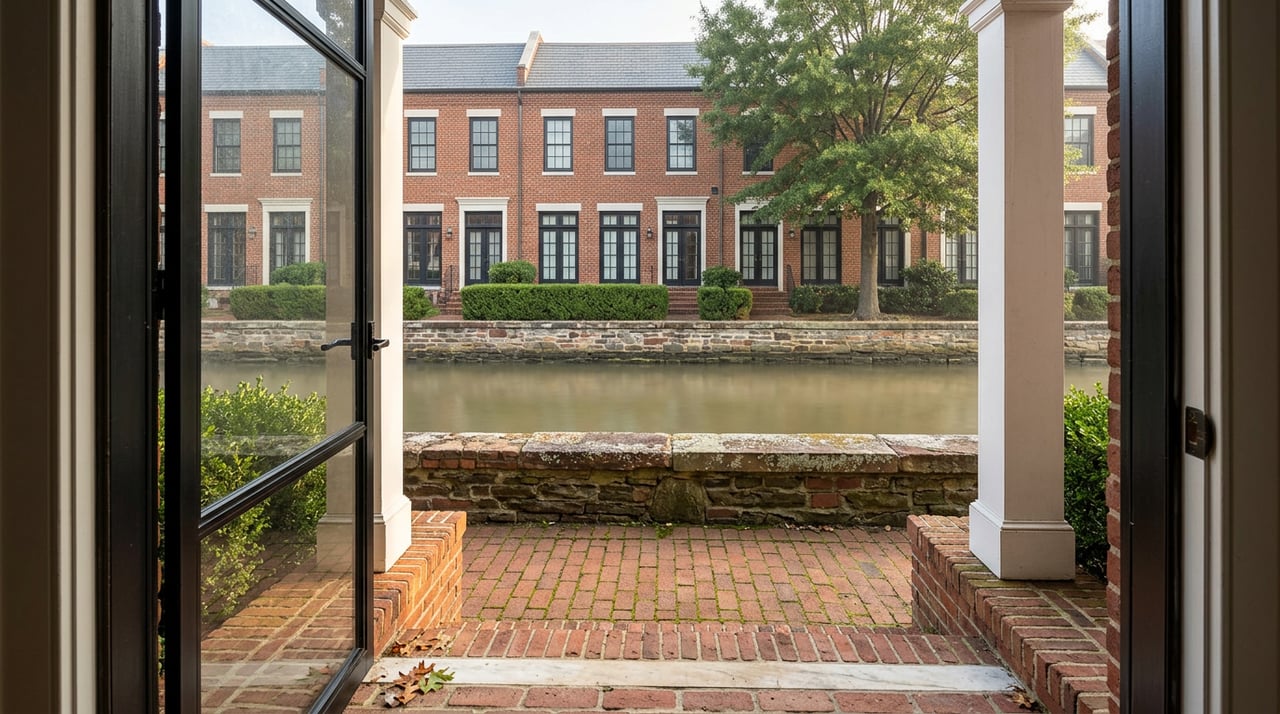
The Pump Station Everyone Fought Over Is Gone. Here's What's Digging Up King Street Instead.
"Probably the number 1, 3, 11 that we're getting right now is related to the waterfront flood mitigation project," Alexandria Mayor Alyia Gaskins told ALXnow last September, describing the top complaints flooding into the city's 311 system. "Most people write in and they're specifically talking about the pump station."
That pump station does not exist anymore.
If you live near Old Town's waterfront, you spent the better part of two years hearing about a two-story pump house planned for Waterfront Park, the petitions against it, the alternative sites proposed by neighborhood groups, the design tweaks meant to shrink its footprint. Then, in February 2026, a letter from the National Park Service ended the conversation entirely. What's replacing that plan looks almost nothing like what you remember arguing about, and it's already under your feet.
On February 20, 2026, the National Park Service told the city it would not modify the 1981 deed governing Waterfront Park, and went a step further: the pump station itself was now considered an impermissible use of the park under that agreement. The reversal surprised city staff. Project manager Matt Landes called it "major and sudden," noting NPS had been "generally supportive" of the concept for years while it worked through design and environmental review.
The pump station had been the most visible flashpoint in the whole project. A Change.org petition against it drew more than 1,100 signatures, and the Alexandria Waterfront Alliance, a coalition that includes the Historic Alexandria Foundation, the Old Town Civic Association, and the Old Dominion Boat Club, had pushed for the structure to move across the street to 1 Prince Street instead of sitting inside the park. None of that mattered once NPS closed the door. At a March 25 council meeting, staff walked through the fallout and City Council directed them to find a path forward that didn't need a pump station at all.
On June 13, 2026, City Council approved that path: an enhanced gravity storm sewer system, referred to in city documents as Option 3. Instead of actively pumping floodwater back into the Potomac, the new design upsizes the existing storm sewer network and adds automated backflow prevention devices, letting gravity and better pipes do the work the pump station was built to do.
The performance numbers are close to what the pump station promised. Option 3 is projected to eliminate 100 percent of sunny-day tidal flooding and protect against river flooding up to an elevation of six feet, matching the original plan's targets for those categories. What changed is the price and the politics. The original pump station concept had already climbed in cost before the NPS letter arrived, from roughly $118 million to $189 million, a jump the city attributed to tariffs, labor costs, and construction risk. Option 3 comes in lower at 30 percent design, estimated between $145 million and $165 million, against about $141 million in confirmed funding from capital funds, stormwater utility fees, and grants.
| Original Pump Station Plan | Option 3 (Approved June 2026) | |
|---|---|---|
| Status | Killed by NPS, February 2026 | Approved by City Council, June 2026 |
| Estimated cost | Rose from $118M to $189M | $145M to $165M at 30% design |
| Park closures | Waterfront Park and Point Lumley closed fall 2026 to fall 2028 | No park closure planned under current design |
| Flood protection target | Elevation 6 feet, ends sunny-day flooding | Same targets, via gravity system |
The version of the story that made headlines was the pump station fight. The version that actually affects your neighborhood right now is quieter: to keep Option 3 within the available budget, the city is deferring infrastructure improvements to Point Lumley Park and its bulkhead. Waterfront Park's pipe network and shoreline work move forward. The park at the foot of Duke Street, the one with the gravel lot the project team had planned to turn into new lawn and a wharf, is not part of the current funded scope.
That deferral matters because the flooding it was meant to address is not slowing down. City data presented to Council in March showed sunny-day flooding events at the Prince Street gauge jumped from a 20-year average of 145 per year to 227 in the twelve months studied, and river overtopping events rose from an average of 37 to 93 in that same period. By 2100, the city's own projections put those numbers at 353 sunny-day events and 341 overtopping events annually. Current flood-related costs already run between $400,000 and $800,000 a year. Businesses along The Strand have been adapting around this reality for years. Big Wheel Bikes, near Waterfront Park, sits three feet off the ground specifically to survive the water that regularly comes up from the river.
If you've noticed underground work near the waterfront this year and assumed it was all one project, you're not alone, and you'd be half right. On July 1, 2026, the city marked "RiverRenew Dedication Day" for a separate, now-completed project: a 12-story underground pumping station built by AlexRenew to fix combined sewer overflows, a problem tracing back to the 1800s. That system is designed to cut the city's combined sewer overflow events from about 70 a year to fewer than four, reducing the volume reaching local waterways from roughly 140 million gallons to under 17 million, with overflows into Hooffs Run expected to drop by 99 percent. It met a state deadline that had already been extended once, and speakers at the dedication noted the project ran from concept to completion in about eight years, roughly half the time comparable efforts typically take.
RiverRenew is finished. The Waterfront Flood Mitigation Project is not, and it solves a different problem: not sewage overflow, but the river and tidal flooding that regularly reaches King Street, Prince Street, Union Street, and The Strand. Both involve big pipes near the water. Only one of them is still digging.
The visible sign that Option 3 is moving is the utility investigation work the city ran from July 13 through July 24, 2026, sending crews to dig test pits at Lee and King, Prince and Union, along The Strand, and near Robinson Landing and Cheeseman Way, mapping the underground utilities the new pipe network will need to avoid. That's a design step, not construction. City officials have said the project is a little over 30 percent through design, with final design expected between winter 2026 and spring 2027, and construction targeted for summer or fall of 2027.
Nothing about that timeline requires a park closure under the current plan, which is itself a change from the version that would have shut Waterfront Park and Point Lumley Park for two years. Whether Point Lumley's improvements get funded later, or stay deferred indefinitely, is the open question worth watching heading into next year's budget cycle rather than this fall's council calendar.
The fight over the pump station consumed two years of public meetings and a change.org petition's worth of frustration. The plan that's actually being built now arrived with far less noise, cost less, and quietly left one park's promised upgrade on the table. If you live within a few blocks of King Street or The Strand, that's the version of the story worth knowing, not the one that generated all the complaints last year.
If you're weighing what any of this means for a home near the waterfront, or just want a straight read on how Old Town's infrastructure changes might affect a specific block, Jennifer Hernandez is happy to talk it through. Let's Connect.

Quick guide to reducing the stress of selecting the right home alarm system for your household.

Explore McLean, VA real estate trends, including median prices, inventory, and market insights.

Transform your workspace with tips for designing a modern, stylish, and functional home office.

Discover essential care tips for successfully growing a vibrant tropical banana plant indoors.
Align your home search with your lifestyle needs and preferences to find your perfect fit.
Whether you’re buying, selling, or relocating, Jennifer provides personalized guidance, local expertise, and a trusted, full-service approach to help you move forward with confidence.